
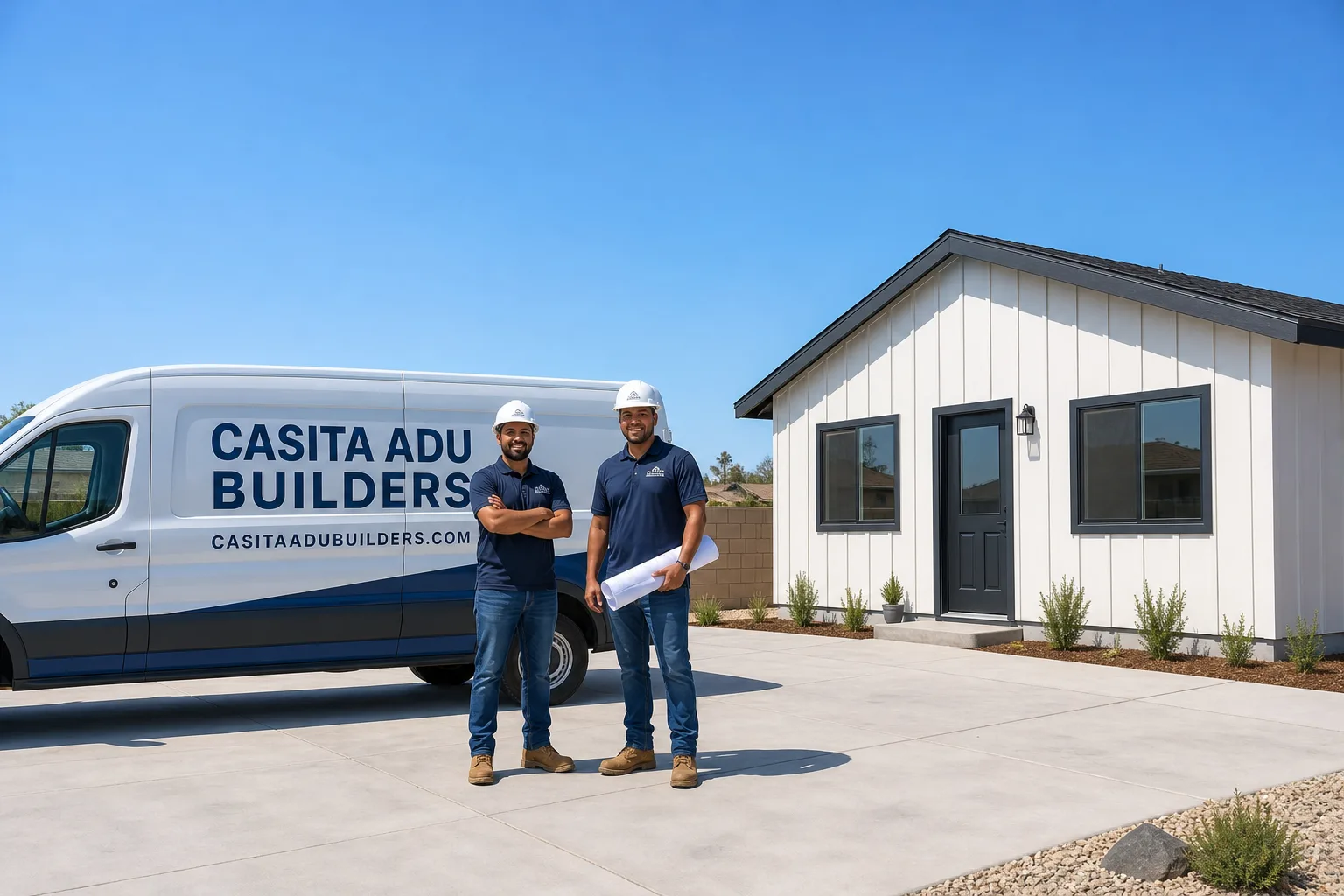
Fast, Reliable ADU Builders Across Running Springs
If you own a single-family property in Running Springs, adding an ADU with Cover service in Running Springs is one of the smartest moves you can make in this mountain market. But building at 6,000 feet inside a national forest is nothing like building in the valley below. You need a team that knows San Bernardino County’s mountain rules, understands snow loads and wildfire defensible-space requirements, and won’t get tripped up by a steep driveway or an unpermitted 1970s cabin addition. That’s exactly the kind of work we do. Call (877) 658-7475 and we’ll walk your specific 92382 parcel with you before you spend a dollar on design.
Key takeaways for Running Springs homeowners:
- Every ADU in Running Springs starts with a county mountain-area fire-defensible-space review and Cal Fire access check, not just zoning approval.
- A typical studio ADU in Running Springs runs $165,000 – $225,000; a one-bedroom runs $210,000 – $280,000; a two-bedroom detached runs $270,000 – $360,000.
- Steep, narrow driveways off Highway 18 and Rim of the World Highway kill more mountain ADU projects than anything else.
- We pre-inspect older cabins before design so opening walls doesn’t turn into an unbudgeted surprise.
Why Casita ADU Builders Is Running Springs’s Preferred ADU Builders Company
Nolan Treffert leads our team with a singular focus on ADUs, not general construction with ADUs as a side service. That focus matters in Running Springs because this market throws curveballs that general contractors in the valley never see. We’ve walked parcels off Highway 18, up Keller Peak Road, and through the Live Oak Drive corridor. We know which 92382 lots will clear Cal Fire access review and which won’t, before you spend money on plans. Homeowners in Running Springs reach us because they want someone who can match the build type to the lot, not force a lot to fit a build type.
Our position as a brand-agnostic prefab and modular ADU specialist means you’re choosing from Abodu, Cover, Dvele, and others, rather than settling for whatever single product one dealer happens to carry. James Hardie fiber-cement exteriors come standard on our builds because this mountain climate demands a siding that shrugs off snow, freeze-thaw, and decades of high-elevation UV. We work with Running Springs homeowners from first site walk to final inspection, and our in-house kitchen and bathroom remodeling team finishes the interior under the same contract. No handoffs to a second contractor mid-project.
Backyard ADU in Running Springs
A backyard ADU in Running Springs is a detached accessory dwelling unit placed on a mountain parcel, and the 92382 reality is that site selection is driven by access, defensible space, and utility availability far more than open square footage. Steep sloped lots off Rim of the World Highway and Keller Peak Road often have exactly one viable building envelope that meets county setback rules, fire truck turnaround, and septic or well setbacks. A typical detached studio ADU in Running Springs runs $165,000 – $225,000, a one-bedroom $210,000 – $280,000, and a two-bedroom $270,000 – $360,000. Those ranges assume a buildable pad already exists; they move when driveway work or foundation engineering enters the picture.
Sloped lot and foundation considerations
Many Running Springs backyards sit on 15 to 30 percent grade, which means pier-and-beam or post-and-beam foundations with frost-depth concrete piers rather than a simple slab. This is not a valley build. We factor the excavation, retaining, and drainage into the allowance structure from the start.
Defensible space and placement
The county mountain-area review means your backyard ADU can’t sit tucked into dense tree cover. Ember-resistant venting, Class A roofing, and a 30-foot reduced-fuel zone around the structure are not optional add-ons here. We design to those requirements from day one.
ADU Construction in Running Springs
ADU construction in Running Springs means building within San Bernardino National Forest boundaries, which places wildfire safety review and access requirements ahead of almost every conventional zoning concern. A project that would be a straightforward one-story build in Highland or Mentone becomes a carefully sequenced mountain construction job here. Realistic all-in construction costs for a detached ADU in Running Springs run $165,000 for a compact studio up to $360,000 for a well-finished two-bedroom, with the higher end common when foundation work, snow-load structural upgrades, or septic expansion are required. The same prefab shell will land differently in Running Springs than in a flatland city.
Winter construction windows
At 6,000 feet, the practical build season runs roughly April through November. We sequence foundation and framing for the dry months and reserve interior work for late fall and winter. If you’re planning a 2026 ADU, the site work and permit submittal need to start early in the year.
Septic, well, and utilities
Many 92382 parcels run on septic and private wells rather than public sewer and water. An ADU adds bedrooms, which adds fixture counts, which can trigger septic system review and sometimes expansion. We verify utility capacity before you commit to a floor plan.
Trusted Brands We Service in Running Springs
We work across leading prefab and modular manufacturers so you choose the right ADU, not just the one we happen to sell. For Running Springs projects, we typically recommend Abodu for its quick-to-permit panelized system, Cover for precision engineering that handles odd sloped lots well, and Dvele for high-performance envelope work that suits a 6,000-foot winter climate. Because we stock and order parts specifically for Running Springs builds, lead times stay predictable even when a snow event delays a delivery. James Hardie fiber-cement is our exterior standard across all of them. You can also run a ADU Builders team comparison with us directly; we’re happy to show you how the brands stack up for your specific parcel.
Common ADU Builders Problems We See in Running Springs Homes
- Unpermitted additions from decades past. A cabin built in 1965 with a lower-level conversion or a deck enclosure done without permits in 1987 is common along Live Oak Drive and the older streets off Highway 18. When an ADU permit application touches the property, the county often flags the entire existing structure for review, which can trigger retroactive permitting or demolition of the unpermitted work before we even start.
- Cloth-wrapped aluminum wiring and undersized panels. Opening a wall to tie in an ADU frequently reveals wiring from the 1960s or 1970s that won’t pass today’s electrical inspection. You can’t build a new unit on an old service drop and call it safe. The rewire is now part of the job, and it’s better discovered during a pre-inspection than mid-framing.
- Dry-rotted pier-and-beam foundations. Mountain moisture, snow melt, and decades of incremental owner-built additions leave many Running Springs cabins sitting on compromised posts and beams. An ADU footer might be fine while the existing structure next to it is failing. We inspect both before design.
- Steep driveways that fail fire-access review. Cal Fire’s turnaround and grade requirements turn many narrow, winding mountain driveways into deal-killers. The building pad isn’t the problem. The 14-foot-wide, 13.5-foot-clearance access route is. We verify this on day one.
Pricing for ADU Builders in Running Springs, CA
Here’s what Running Springs homeowners should actually budget for. A detached studio ADU runs $165,000 – $225,000. A one-bedroom runs $210,000 – $280,000. A two-bedroom with a real kitchen and bath runs $270,000 – $360,000. Where you land inside those ranges depends on your foundation condition, whether your septic system handles the added load, the snow-load structural upgrades required at your specific elevation, and the driveway work needed for Cal Fire access. We write inspection findings and allowance ranges into your contract before construction starts, then price any surprise in writing before we touch it. A shed-to-ADU conversion through our Tuff Shed partnership is often the most economical path for Running Springs cabins that already have a standing outbuilding. Call (877) 658-7475 for a free estimate on your 92382 parcel.
We Also Serve Cities Near Running Springs
Beyond Running Springs, our team regularly works in ADU Builders in Running Springs‘ neighboring mountain and foothill communities. We serve Lake Arrowhead, Crestline, Highland, and Mentone, each with its own mix of mountain rules, valley rules, and utility footprints. If you’re anywhere along the 18 or the 330, you’re in our service area.
Serving Running Springs, CA — Our Local Coverage Area
We’re based in the Running Springs area and know this community well. Use the map below to see our service coverage — if you’re nearby, we can almost certainly help.
FAQs About ADU Builders in Running Springs
It’s the first gate. Because Running Springs sits inside the San Bernardino National Forest, your ADU must clear a county mountain-area fire-defensible-space review and a Cal Fire access check before construction can begin, and these reviews shape the design far more than standard zoning does. Defensible space, ember-resistant vents, Class A roofing, and fire truck access with proper turnaround are non-negotiable on a new detached unit. If your parcel can’t meet the access requirements, the project stops there regardless of how buildable the pad looks. Call (877) 658-7475 and we’ll do a no-cost access and defensible-space walk before you engage a designer.
Usually yes, but you’ll almost certainly have to resolve the unpermitted work as part of the permit process. When an ADU application touches a Running Springs property, the county reviews the entire parcel, not just the new unit. Unpermitted additions from the 1960s, 1970s, or 1980s often have to be brought up to code, retroactively permitted, or in some cases removed. On a sloped lot off Rim of the World Highway, our crew opened the wall of an old cabin to tie in the ADU and found cloth-wrapped wiring and a pier-and-beam foundation with dry-rotted posts. We wrote a change order with an allowance for a full electrical rewire and new pressure-treated piers, priced it in writing, and only proceeded after the owner approved. That’s how we handle every older Running Springs home, not just the ones we discover problems in.
Your ADU needs snow-load-rated roof framing, frost-depth footings or piers, insulated and freeze-protected plumbing, and roof tie-offs designed for snow shedding, not valley-standard specs. A roof designed for Highland or Mentone will not survive a Running Springs winter without leaks or worse. We specify mountain-caliber structural and envelope details on every 92382 build, and James Hardie fiber-cement siding holds up to the freeze-thaw cycles in ways cheaper exterior finishes don’t.
We pre-inspect before we open anything, and we write allowance ranges into the contract for exactly the problems Running Springs cabins tend to reveal: outdated wiring, failed waterproofing, undersized framing, and compromised piers. When a surprise does appear mid-project, we write a change order with a specific price, get your written approval, and only then proceed. No open-ended time-and-materials billing unless you specifically request it. Call (877) 658-7475 for an estimate that includes a line-item allowance structure for your specific cabin.
Maybe, but the driveway is often the deal-killer, not the building pad. Cal Fire requires specific access widths, grade limits, and turnaround geometry for any new detached unit, and many older Running Springs driveways were built for a 1972 sedan, not a fire engine. If your driveway can’t meet the fire-access standards, the lot may be undevelopable for a detached ADU regardless of how much flat space you have. Before you invest in plans, call us for a free access assessment at (877) 658-7475. Sometimes a garage conversion or an attached unit on the existing footprint is the workable path when a detached unit isn’t.
Written by Nolan Treffert, Owner at Casita ADU Builders, serving Running Springs and the San Bernardino Mountains.